
Exploring Orthobiologics & Interventional Orthopedics in Regenerative Medicine
Learn how orthobiologics, PRP, prolotherapy, bone marrow aspirate, and interventional ultrasound use your body's natural healing processes to treat musculoskeletal pain.
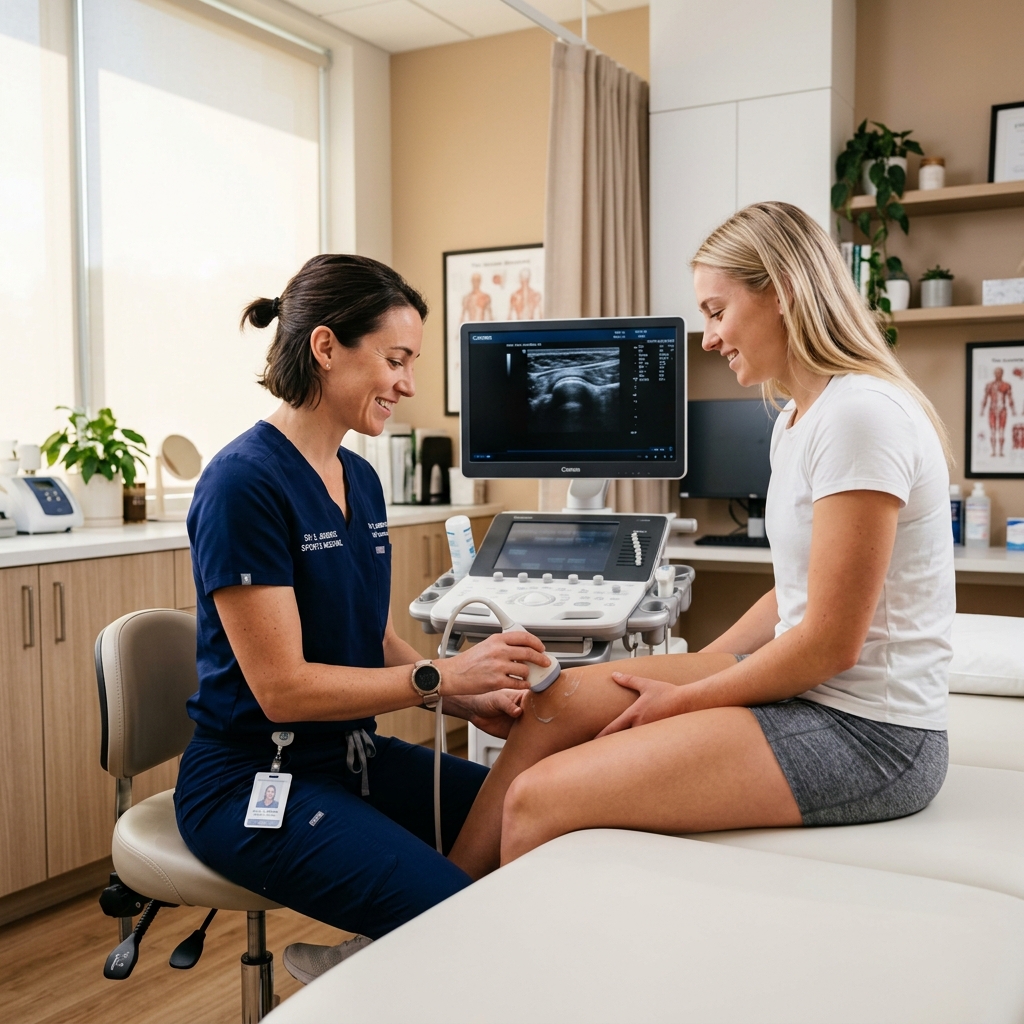
We hear this a lot: “I don’t know what orthobiologics even means.” So, let’s discuss the field of orthobiologics, how it’s used in practice today, and how it might actually apply to you.
What is Orthobiologics?
Orthobiologics refers to the use of biologic substances, derived from the patient’s own body, to enhance the healing process. These substances contain growth factors and are injected into your body to help remind it how to heal itself.
Orthobiologic treatments are intended to reduce pain and improve function. They are used for a variety of situations including joint pain, tendon pain, or ligament issues.
What is the Difference between Orthobiologics, Regenerative Medicine, and Interventional Orthopedics?
Orthobiologics and interventional orthopedics are interconnected fields that focus on utilizing the body’s natural healing processes to treat musculoskeletal conditions and injuries.
Regenerative medicine is a broader field of medicine and encompasses a broader approach to healing. It involves utilizing various techniques, including stem cells, tissue engineering, gene therapy, and other advanced therapies, to promote the body’s natural regenerative capabilities. Regenerative medicine is used for a variety of purposes across different medical fields including organ transplantation, wound healing, and cardiovascular disorders (in addition to orthopedics and sports medicine).
Interventional orthopedics combines the principles of orthopedic medicine with the minimally invasive techniques of interventional radiology. It involves the use of ultrasound-guided procedures, such as injections, to treat orthopedic conditions. Interventional orthopedics often includes the use of orthobiologics to promote healing and alleviate pain without resorting to surgical intervention. Read more about interventional ultrasound here.
The Big Four in Orthobiologics
Here are the most commonly used injectates in orthobiologics:
- Prolotherapy: Prolotherapy involves injecting a substance, such as dextrose, into the affected area to stimulate your body’s natural healing processes.
- PRP (Platelet-Rich Plasma): PRP stands for platelet-rich plasma. It involves injecting the patient’s own blood cells to stimulate healing in the targeted area.
- Bone Marrow Aspirate: In this procedure, the provider uses a thin needle to extract a small amount of bone marrow from your body (usually your hip bone) and then injects it into an area affected by pain or injury to stimulate a healing process.
- Lipoaspirate: Lipoaspirate is similar to liposuction and involves using the cells in your body’s own fatty tissue to stimulate and support the healing process of orthopedic injuries or conditions.
What Can Orthobiologics Treat?
Orthobiologics can be used to treat a range of musculoskeletal conditions and injuries. Some of the conditions that orthobiologics are used to address include:
- Osteoarthritis
- Ligament tears
- Ligamentous laxity
- Tendon ruptures
- Acute and Chronic Tendinopathy
- Cartilage Defects
- Fracture Healing
Dr. Rudolph is an internationally recognized expert in orthobiologics and ultrasound guided interventions. If you are considering orthobiologics for your current condition, it is worth scheduling a consultation to discuss your options further.

References
- Fang, W. H., Chen, X. T., & Vangsness, C. (2021). Ultrasound-Guided Knee Injections Are More Accurate Than Blind Injections: A Systematic Review of Randomized Controlled Trials. Arthroscopy, Sports Medicine, and Rehabilitation, 3, e1177 - e1187.
- Goulian, A. J., Goldstein, B., & Saad, M. A. (2025). Advancements in Regenerative Therapies for Orthopedics: A Comprehensive Review of Platelet-Rich Plasma, Mesenchymal Stem Cells, Peptide Therapies, and Biomimetic Applications. Journal of Clinical Medicine, 14.
- Navani, A., Jeyaraman, M., Jeyaraman, N., Ramasubramanian, S., Nallakumarasamy, A., Azzini, G., & Lana, J. F. (2025). Precision Medicine in Orthobiologics: A Paradigm Shift in Regenerative Therapies. Bioengineering, 12.
- Rodeo, S. (2023). Orthobiologics: Current Status in 2023 and Future Outlook. Journal of the American Academy of Orthopaedic Surgeons, 31, 604 - 613.
- Shen, P., Lin, T.-Y., Wu, W.-T., Özçakar, L., & Chang, K. (2024). COMPARISON OF ULTRASOUND- VS LANDMARK-GUIDED INJECTIONS FOR MUSCULOSKELETAL PAIN: AN UMBRELLA REVIEW. Journal of Rehabilitation Medicine, 56.
Want to learn more?
Work with our team to develop a safe, effective program tailored to your unique goals and physiology.
Book an Assessment